
Getting Started with the Camino de Santiago
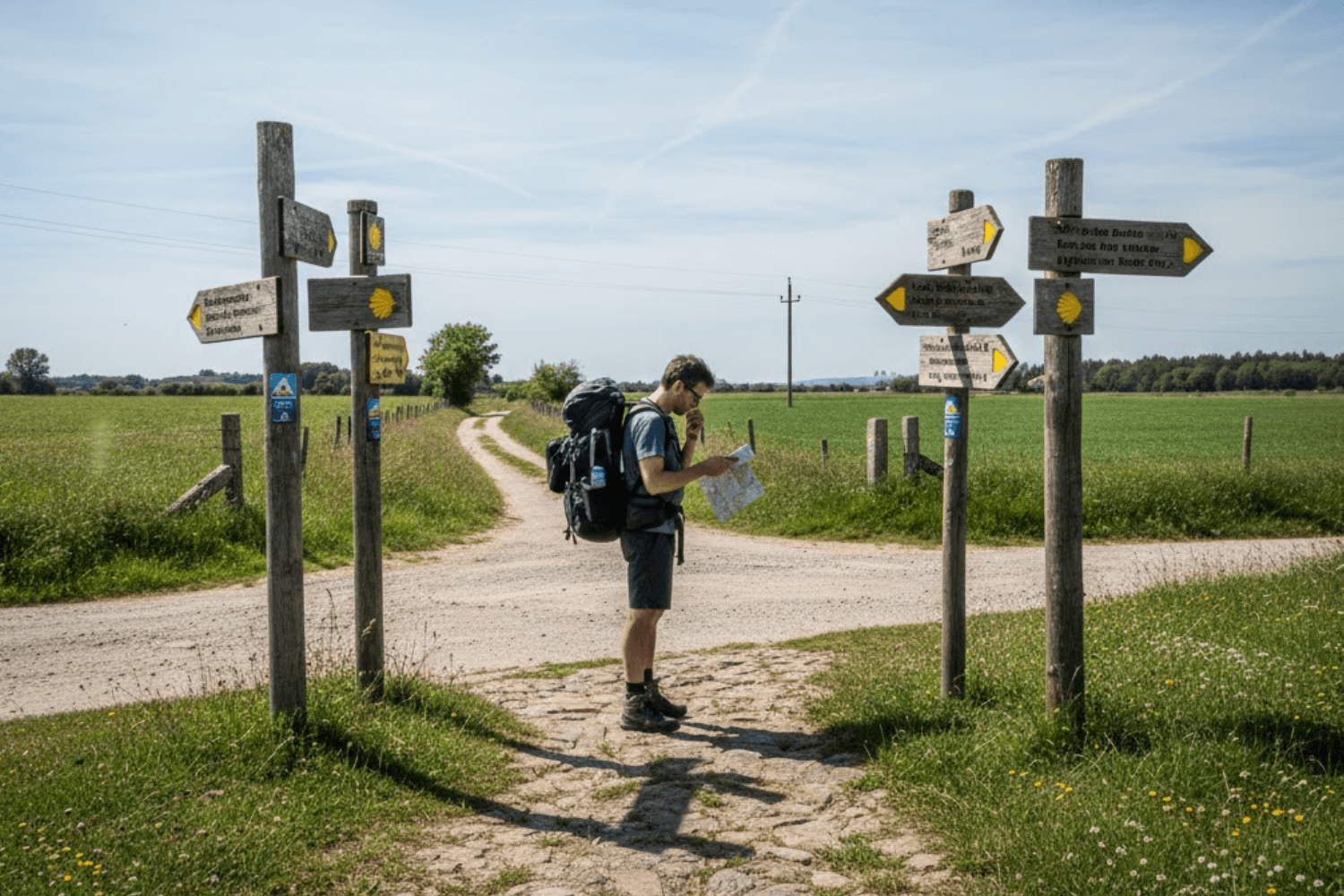
Planning your Camino de Santiago can feel overwhelming at first—and that's completely normal. With dozens of routes, countless starting points, and many personal reasons for walking, the Camino isn't a single journey but thousands of different ones. The good news is that you don't need to have everything figured out from day one. The Camino rewards simple planning, openness, and a bit of flexibility. This guide will help you take your first confident steps toward planning your Camino.
The first step is to clarify why you want to walk the Camino. Some people come for spiritual or religious reasons, others for personal reflection, adventure, fitness, or simply to disconnect from everyday life. There's no "right" motivation, but understanding yours will help guide decisions later—like how far you want to walk each day, whether you prefer busy routes or quieter ones, and how much comfort you need along the way. Your Camino starts long before you lace up your boots.
One of the most important choices is selecting a route. The Camino Francés is the most popular and well-supported, making it ideal for first-time pilgrims. The Camino Portugués offers a slightly quieter experience with beautiful coastal and inland options. Routes like the Camino del Norte or Primitivo are more demanding but incredibly scenic. Each route has its own character, terrain, crowd levels, and services. There's no better route—only the one that fits you best.
Once you've chosen a route, the next question is where to start. While all Caminos traditionally end in Santiago de Compostela, starting points are flexible. Many pilgrims choose a town that allows them to walk at least the final 100 km (required to receive the Compostela certificate), such as Sarria on the Camino Francés or Tui on the Camino Portugués. Others start much earlier—or even from their own front door. Your starting point should match your available time, fitness level, and personal goals.
Your available time is often the biggest practical constraint. Some pilgrims have only a week, others several months. A general rule of thumb is 20–25 km per day, but this varies greatly depending on terrain, weather, and experience. If your time is limited, it's perfectly valid to walk a shorter section. The Camino isn't about distance—it's about the experience. Many people return multiple times to walk different sections over the years.
Finally, embrace flexibility. One of the Camino's greatest lessons is letting go of rigid plans. You might walk faster or slower than expected, decide to rest an extra day, or meet people you want to continue with. Weather, body signals, and unexpected moments often shape the journey more than any itinerary. Plan enough to feel secure, but leave space for the Camino to surprise you—that's where the magic often happens.
Starting the Camino is less about perfect preparation and more about taking the first step. With a basic plan, an open mind, and a willingness to adapt, you're already on your way. Buen Camino.